






Winter slows down the pace of everyday life. Outside it's cold, wet, or dark, inside it's warm and cozy. Walks become shorter, time together shifts to the living room, and dogs spend more hours resting by our side. This closeness is precious and strengthens the bond. At the same time, it subtly changes our habits—and those of our dogs.
A glance, a soft sigh, an expectant look from the sofa – and a snack lands in your mouth. Not out of hunger, but out of closeness, habit, or the desire to do something good. Indoor snacking quickly becomes a silent routine in winter. And this is precisely where a chain of effects begins that impact both weight and dental health .
In this article, we'll show you why dogs often gain weight in winter , what role indoor snacking plays in this, and why their teeth suffer from these habits . You'll also learn how you can counteract this with small adjustments – not by depriving your dog, but by being mindful.
When boredom is mistaken for food
Dogs need exercise, mental stimulation, and variety. When these stimuli are partially absent in winter, they experience a lack of mental stimulation. Snacks seem to fill this gap effortlessly. They soothe, provide short-term entertainment, and create a sense of closeness. However, they are no substitute for genuine mental and physical stimulation.
Especially in December and January, these little rewards tend to pile up. A chew toy at work, a treat during movie night, another one in between. What seems harmless individually adds up over the course of a day. Calories accumulate while exercise is lacking. Many dogs gain weight unnoticed in winter – often without it being immediately apparent.
The problem isn't the snack itself, but the frequency. If food becomes the dog's response to boredom or a need for closeness, it loses the opportunity to experience other forms of stimulation. This creates an imbalance that can have long-term effects on weight, mobility, and overall well-being.
Why frequent snacking puts particular strain on teeth
Snacks are fundamentally different from a meal. They are chewed more slowly, often held in the mouth longer, and given throughout the day. Many contain animal proteins, fats, or plant-based ingredients that can easily become lodged on tooth surfaces and between teeth.
These residues form plaque. If left untreated, they provide a breeding ground for bacteria. Soft plaque can develop into tartar , and odor-causing bacteria cause unpleasant breath. Winter further promotes this process because snacking is more frequent and natural cleaning through saliva and movement is reduced.
The more frequently small amounts are fed, the longer the mouth remains in "snack mode." This makes it difficult for the teeth to clean themselves, even if the main meals are balanced.
Less exercise, less drinking, more toppings
Exercise affects far more than just muscles and fitness. It stimulates the entire metabolism and thus also processes in the mouth. Dogs that exercise less often automatically drink less. Their thirst diminishes, and their water bowl is more frequently left untouched. This is a common but underestimated phenomenon, especially in winter.
Drinking less also means less saliva. Saliva is a key protective factor for dental health. It washes away food particles, regulates the bacterial balance, and supports the natural self-cleaning of teeth. When saliva flow decreases, plaque adheres to tooth surfaces and the gum line for longer.
In addition, the dry air from heating systems in living spaces deprives the mucous membranes of moisture and makes the oral cavity more sensitive overall. The gums become more sensitive, and the natural protective film weakens. This combination creates an environment in which bacteria thrive.
Plaque forms more quickly, becomes tougher, and is harder to remove. If left untreated, it can harden and form the basis for tartar and bad breath. Many owners only notice this development late because it progresses gradually, especially during the quieter winter months.
This clearly illustrates why winter places special demands on dental care. When natural cleaning mechanisms diminish, the oral cavity needs targeted support. Gentle, regular care can help reduce plaque before it becomes a problem, all without causing additional stress for the dog.
Why chewing cannot replace dental care
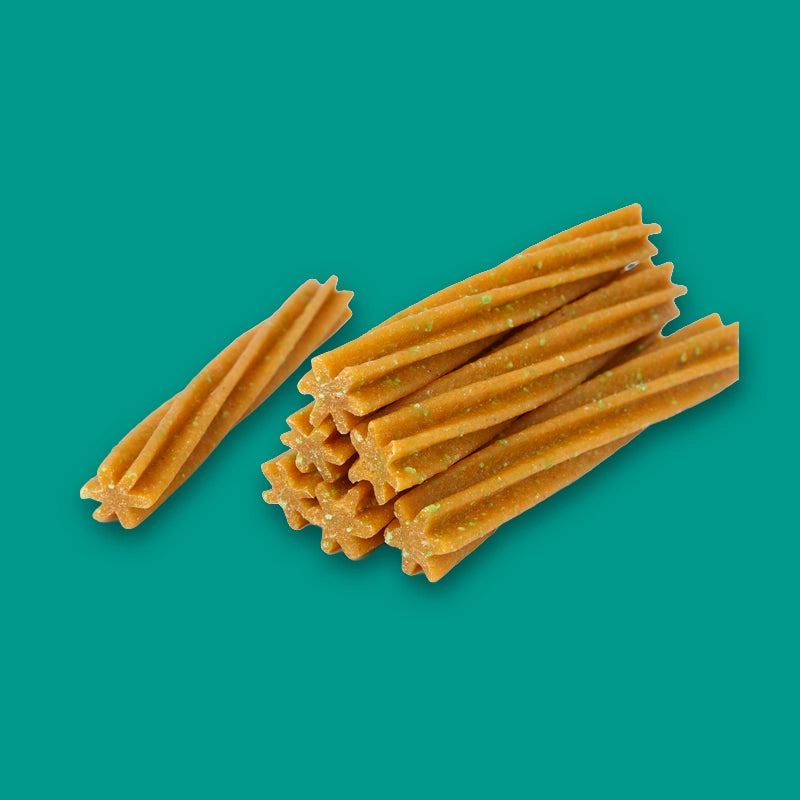
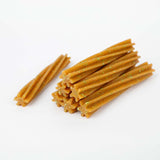
Chewable products are often seen as a natural way to clean teeth. They do stimulate saliva production and can provide a short-term improvement in mouth feel. However, chewing alone is not enough to keep teeth healthy in the long run.
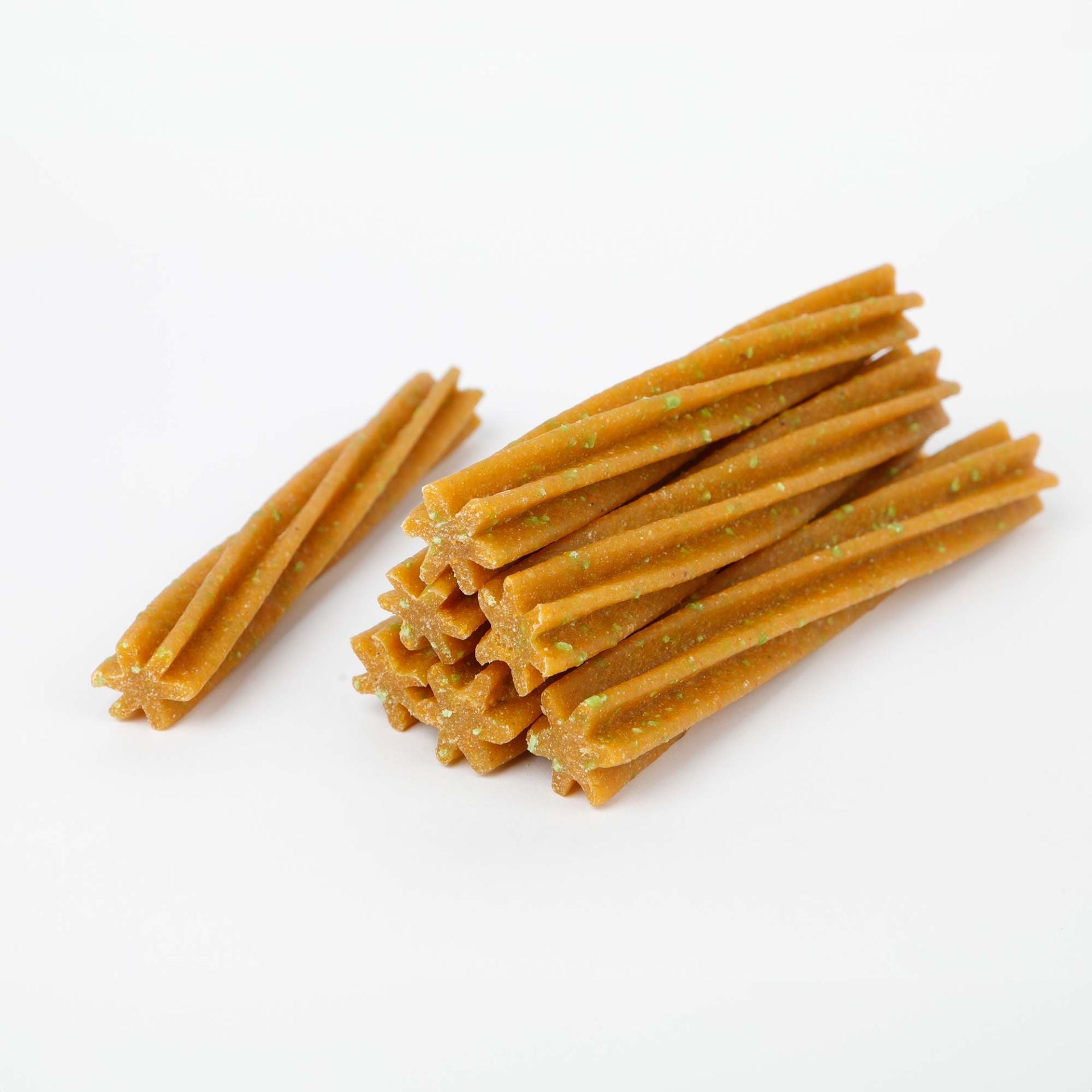
Many chew toys leave residue. Animal proteins, fats, or plant-based ingredients adhere to tooth surfaces, between teeth, and especially along the gum line. Chew toys reach their limits precisely where plaque tends to form. They don't clean effectively, but rather have a superficial effect.
This effect is further intensified in winter. Chews are offered more frequently, while exercise and drinking decrease. At the same time, some dogs unconsciously neglect their dental hygiene because daily life becomes quieter and other routines take precedence. Plaque remains for longer and can develop undisturbed.
This doesn't mean that chewing is bad. It simply means that chewing complements, but doesn't replace, dental care . Especially during periods when snacking and chewing on chewable items increase, the oral cavity needs targeted cleaning that also reaches areas where plaque would otherwise accumulate.
Ultrasonic dental care as a winter-friendly solution
Winter offers ideal conditions for integrating dental care into your daily routine, either for the first time or more consistently. When things are quieter outside and the pace of life slows down, there's time for calm routines. This tranquility is crucial for successful dental care in dogs.
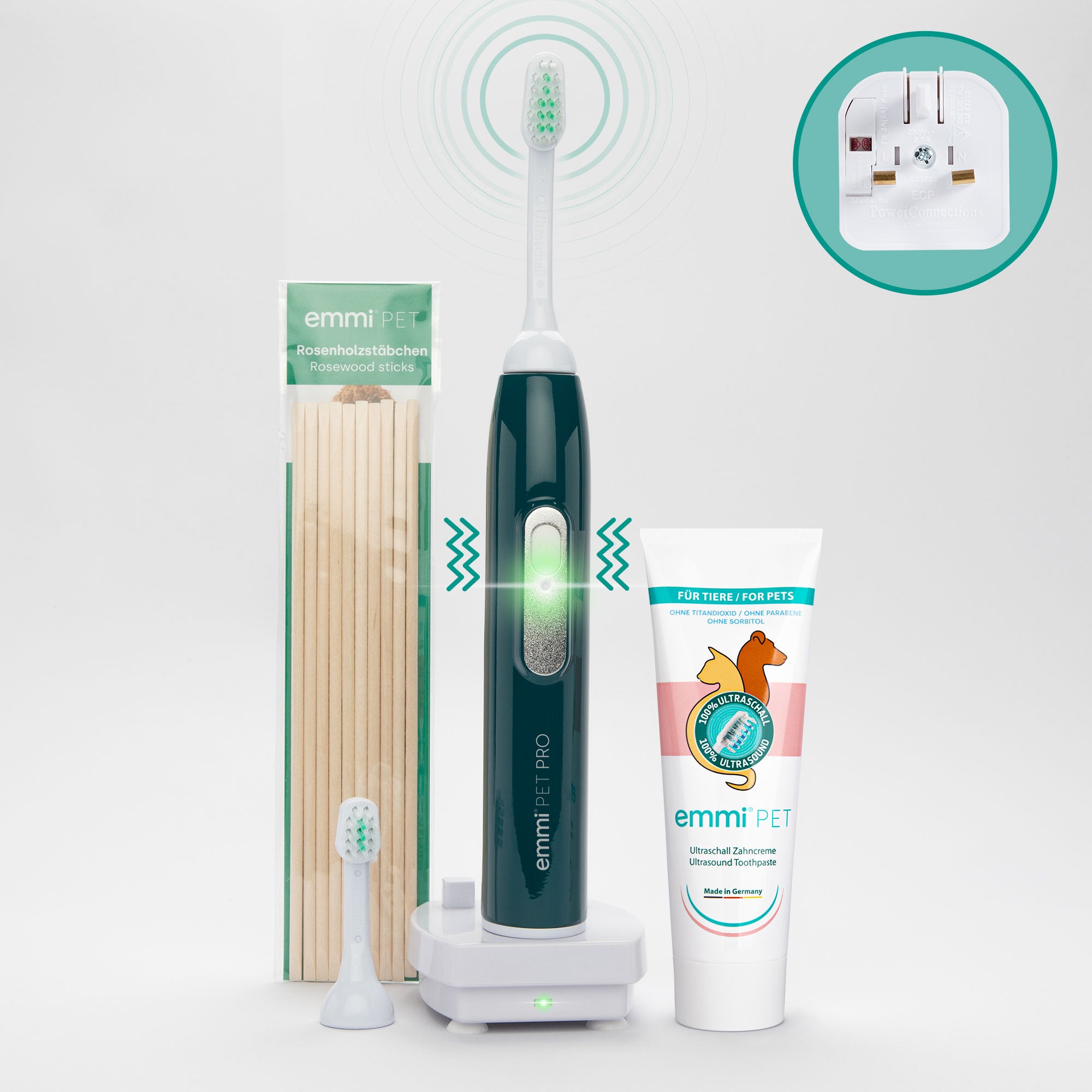
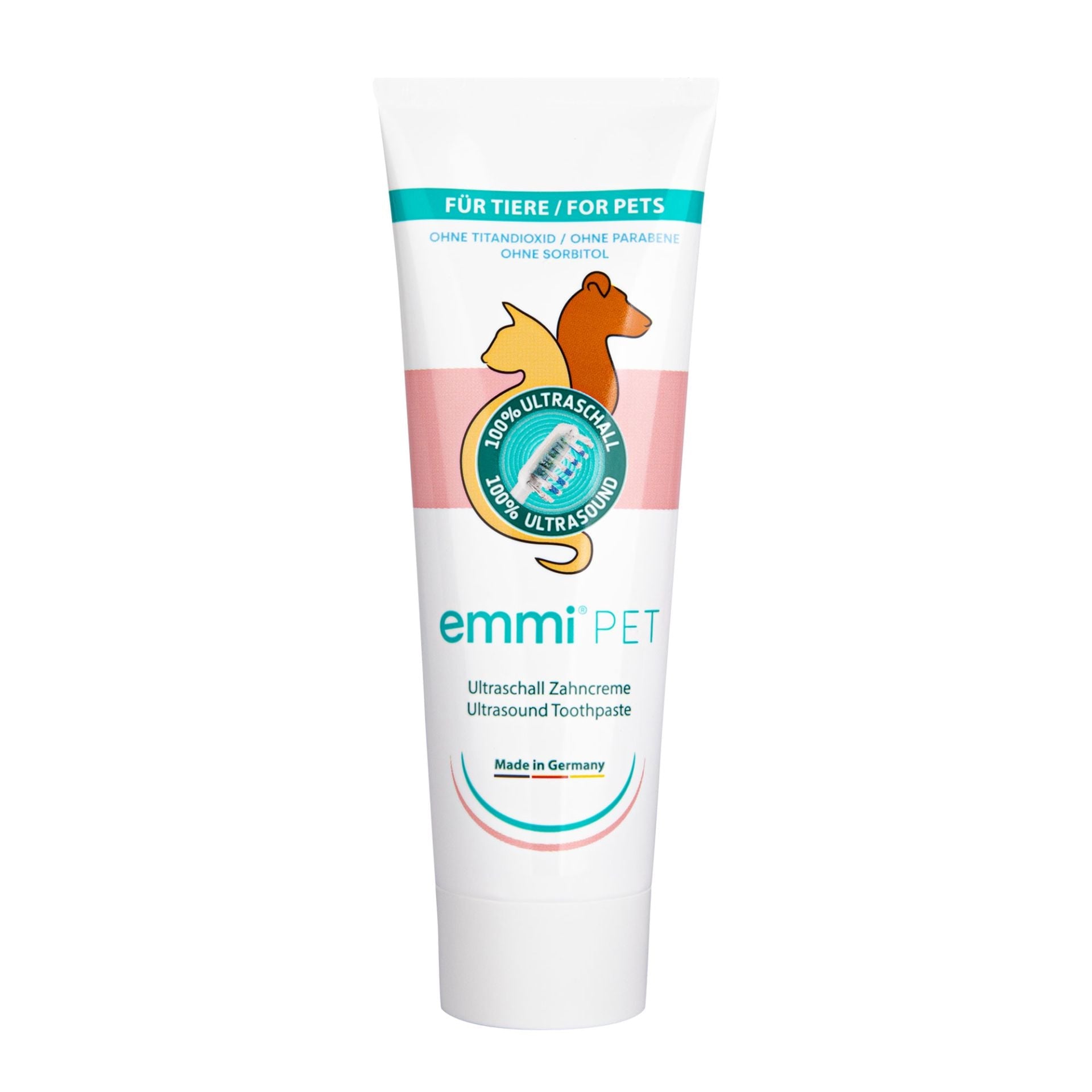
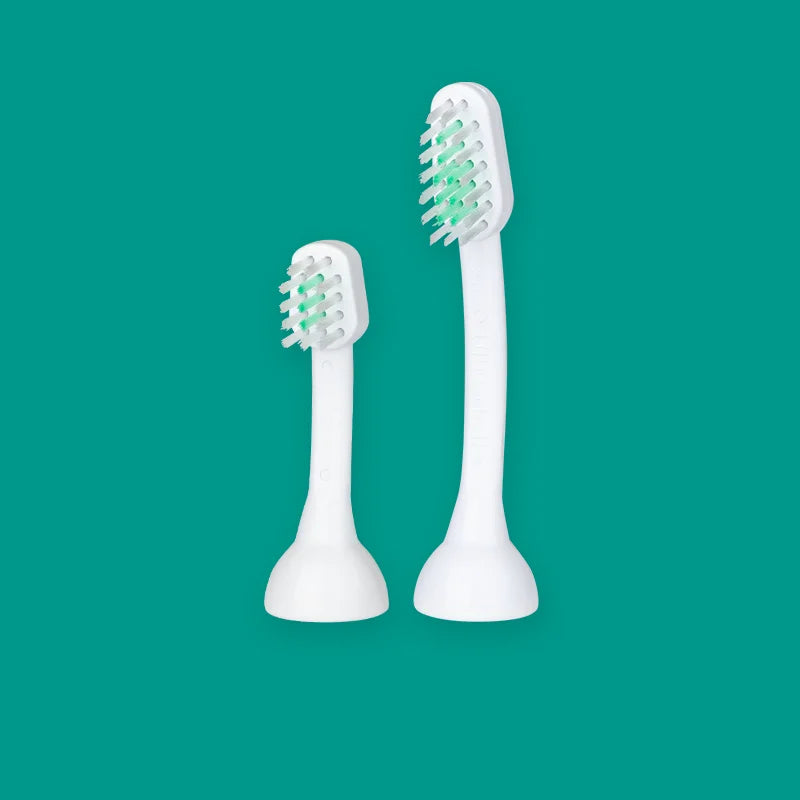
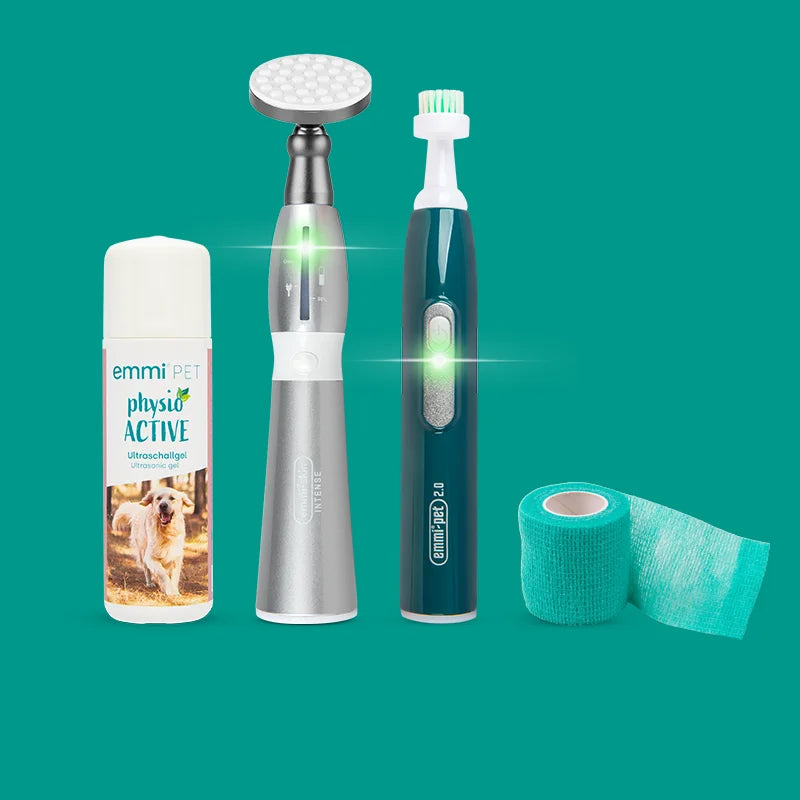
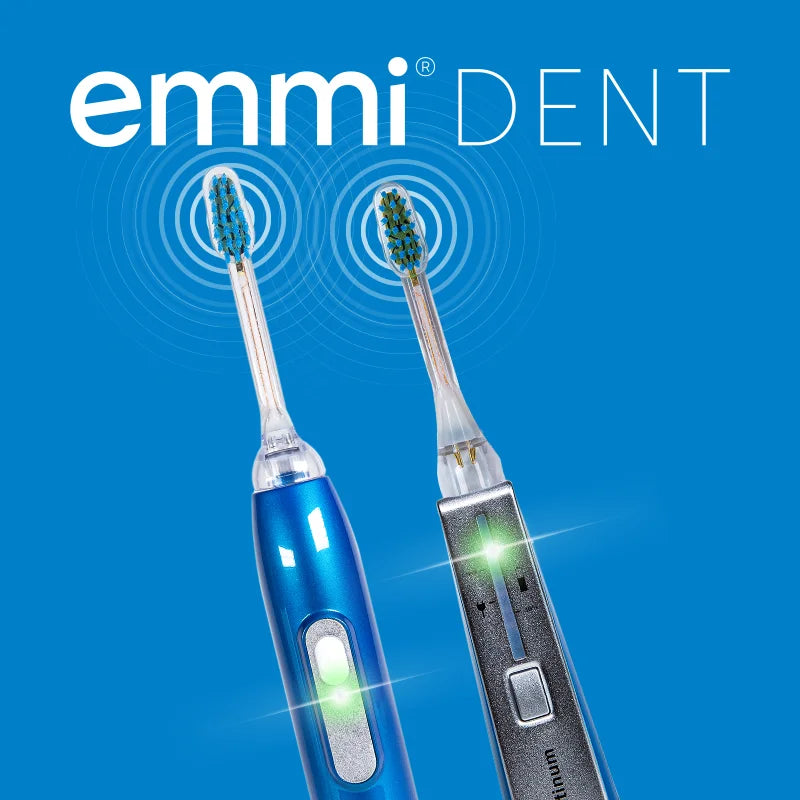
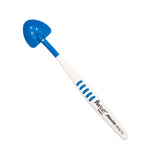
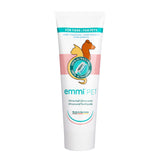
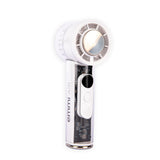
Our emmi-pet ultrasonic dental care works without mechanical scrubbing, vibration, or noise. This makes it particularly suitable for sensitive dogs who are more easily stressed in winter or who otherwise avoid having their mouths touched. The ultrasound also works where conventional brushes often can't reach , such as between teeth and along the gum line.
Many dogs accept this form of dental care much better because it's gentle and calming. Especially in winter, when you spend more time indoors, dental care can easily be established as a regular routine. A quiet moment in the evening, after a walk, or before bedtime.
Winter thus becomes an opportunity to view dental care not as a chore, but as an integral part of self-care. Regular, gentle cleaning helps reduce plaque, prevent bad breath, and support long-term dental health. When natural cleaning mechanisms diminish, ultrasonic dental care provides precisely the support the mouth needs during the cold season.
Rethinking closeness – rituals instead of snacks
Winter brings closer together. More time indoors, more shared quiet, more moments on the sofa. This closeness is precious, but it doesn't have to be based solely on food. Above all, dogs crave attention, reliability, and affection.
Snacks are easy to give, but they don't replace real interaction. Care, touch, and shared rituals create a bond without added calories or strain on the teeth. A quiet moment in the evening, gentle dental care with our emmi-pet Pro Basic Set , or conscious attention often have a stronger effect than any treat.
Such rituals are particularly easy to establish in winter. Daily life slows down, routines become more frequent. Dogs love this reliability. When closeness is no longer based on snacks but on shared routines, both body and mind benefit. Weight remains more stable, the mouth is relieved of strain, and the bond between dog and owner deepens.
Small adjustments with a big impact
Radical changes aren't necessary to get indoor snacking and its consequences under control. Even small, conscious adjustments can make a big difference , especially if they are consistently implemented.
This includes:
- Use snacks strategically and consciously , instead of giving them casually.
- Dispense chew toys sparingly ; do not leave them permanently available.
- Maintain exercise even in winter , adapted to the weather and the dog.
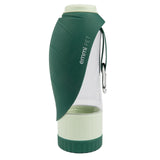
- Keep an eye on drinking habits , for example by using several water bowls.
- Establish consistent dental care routines , calmly and without stress.
- Create closeness through rituals , not through food.
These changes work together. They relieve stress on teeth and weight, stabilize daily life and promote your dog's well-being – without deprivation, but with mindfulness.