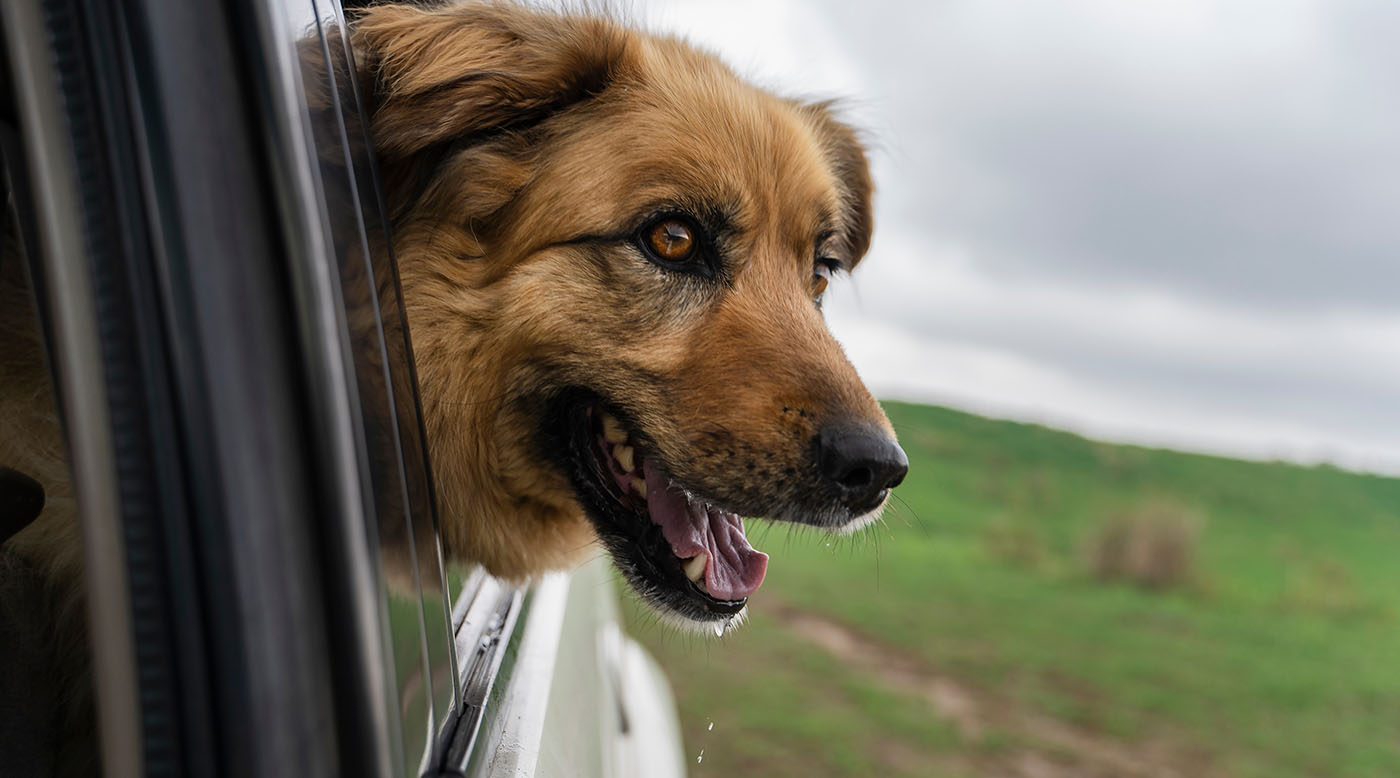















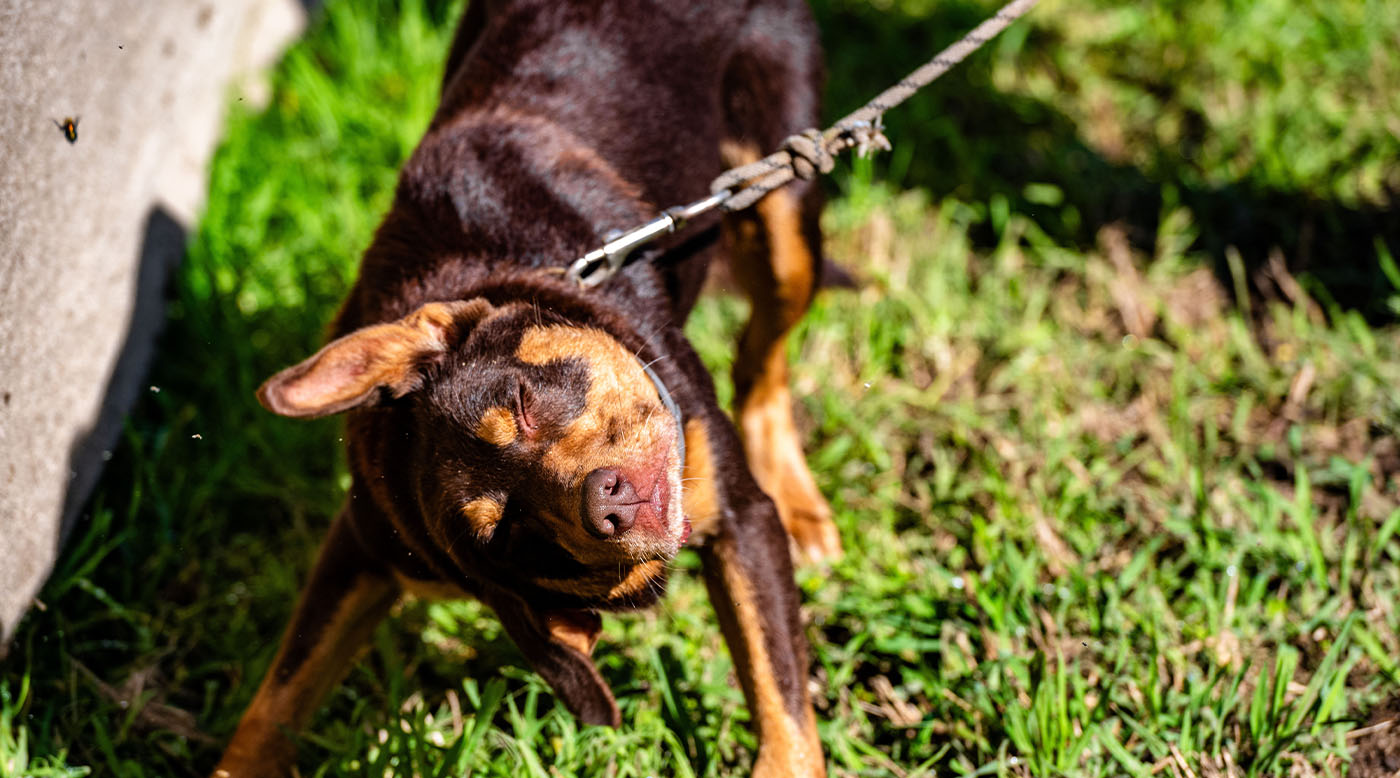
Many dogs shake their heads occasionally. After playing, after a walk in the rain, or when something tickles their ear, this is usually completely normal. However, if your dog shakes their head more and more frequently, or if this behavior suddenly increases significantly, it's worth taking a closer look. Many pet owners initially think of an ear infection or dirt in the ear canal. In reality, however, the causes can be much more diverse.
Your dog's head area is a complex interplay of ears, jaw, muscles, teeth, and mouth. Problems in any of these areas can affect other regions and lead your dog to try and get rid of an uncomfortable feeling by shaking their head. Problems in the mouth, in particular, are often only detected late because dogs often hide pain for a long time.
In this article, we explain why dogs might shake their heads more frequently, what role oral health, teeth, and jaws play in this, and what you should pay attention to in everyday life. You will also learn when a vet visit is advisable and how regular oral care can help support your dog's well-being.
Why dogs shake their heads at all
Head shaking is initially part of a dog's normal behavioral repertoire. Similar to how humans scratch themselves or change their posture, your dog also tries to get rid of irritating stimuli in this way. After bathing, for example, shaking helps to remove water from the fur and ears. Even after sleeping or during play, a short head shake can be completely unremarkable.
The behavior usually becomes noticeable when it occurs significantly more frequently or is accompanied by other changes. Some dogs shake their heads several times an hour, additionally rub their snout on the floor, or generally appear more restless than usual. In such cases, the body is often trying to draw attention to a problem.
Many pet owners automatically focus on the ears. This is understandable, as infections, foreign bodies, or parasites are indeed among the most common causes. Nevertheless, the rest of the head area should not be neglected. Tension in the chewing muscles, pressure in the jaw, or discomfort in the mouth can also trigger similar reactions.
Particularly interesting is the close anatomical connection between the temporomandibular joint, chewing muscles, and ear region. Irritation or pain in one area can cause your dog to perceive a general discomfort throughout the entire head. Head shaking is then not the actual illness, but merely a visible signal that something is wrong.
Therefore, it is always worthwhile to consider your dog's behavior in its overall context. How often does the shaking occur? Are there any other changes when eating, chewing, or yawning? Such observations often provide important clues to the actual cause.
What role the mouth, teeth, and jaw can play
Many dog owners are surprised to learn that frequent head shaking can indeed be related to the mouth. The reason for this lies in the close connection of the different structures in the head area. Teeth, gums, temporomandibular joints, chewing muscles, and ears are anatomically close to each other and influence each other.
When bacterial plaque accumulates on the teeth or the gums are irritated, a clearly visible problem does not always arise immediately. Often it begins with a slight feeling of pressure or increasing sensitivity. Dogs cannot name these complaints. Instead, they show changes in behavior. Some chew more cautiously, others suddenly prefer softer food or pick up toys less often. Still others react with frequent head shaking.
Problems in the area of the temporomandibular joint can also play a role. The joint is heavily used daily, whether chewing, carrying toys, or tugging. If tension or irritation develops there, it can lead to an uncomfortable feeling that spreads to the ears or the surrounding muscles. The dog may then try to alleviate this feeling by shaking its head.
Hidden dental problems should also not be underestimated. Broken teeth, small injuries in the mouth, or inflamed gum pockets often remain undetected for a long time. Dogs are masters at hiding ailments and continuing their daily lives as normally as possible despite pain. Therefore, the first warning signs are often only noticed through small changes in behavior.
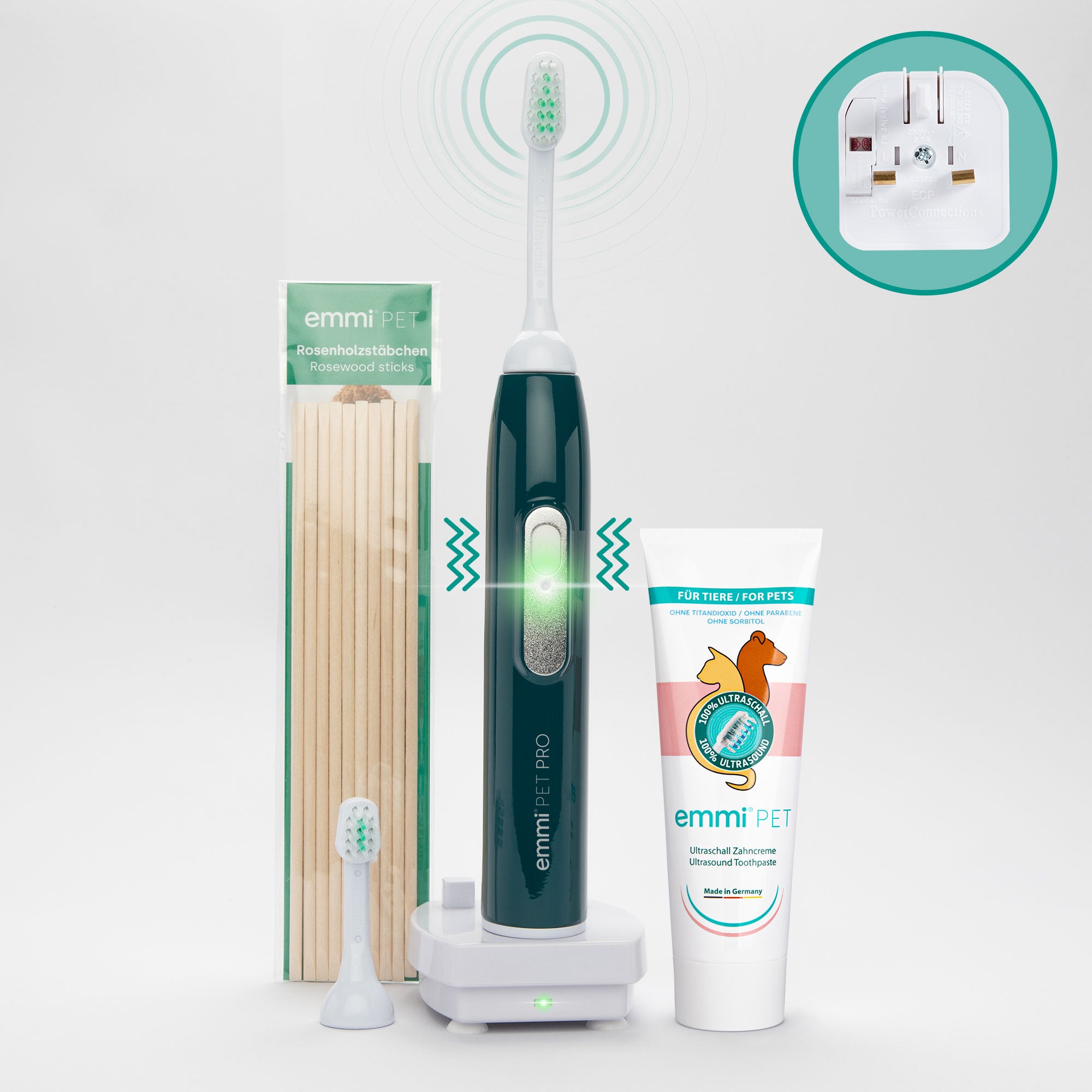
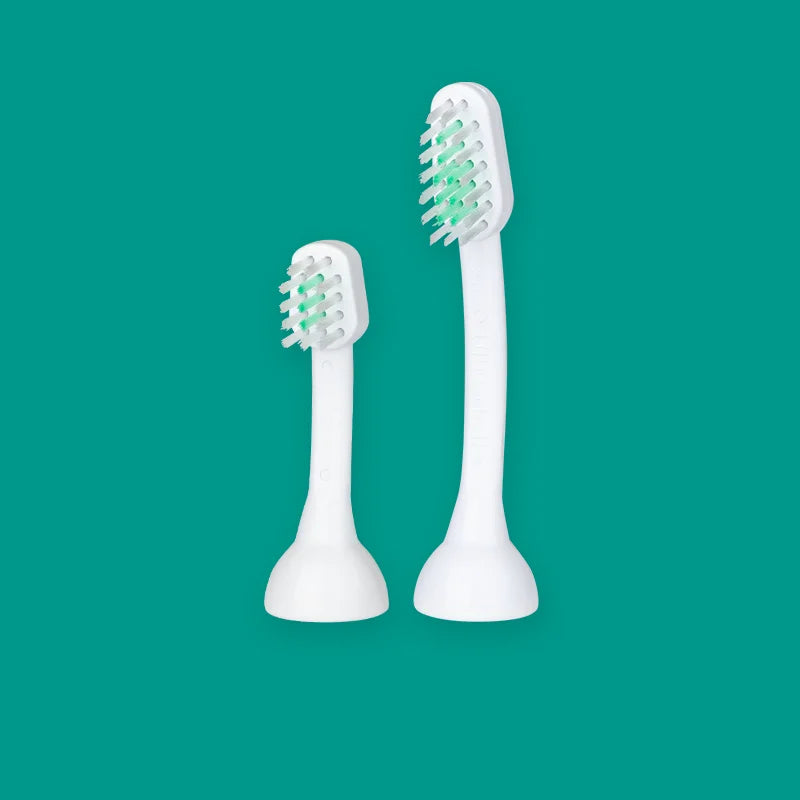
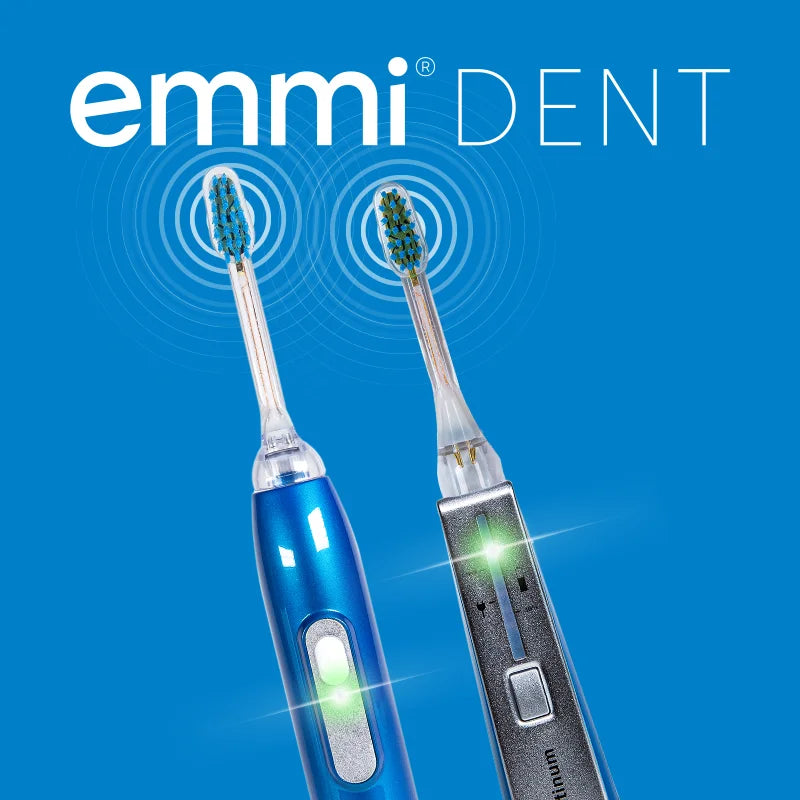
Regular checks of the mouth can help detect changes early. Consistent dental care routine also plays an important role. Many pet owners use our emmi-pet ultrasonic toothbrush as part of their daily oral care. It can help reduce bacterial plaque and support oral hygiene. Of course, home care does not replace a veterinary examination. However, it can contribute to promoting long-term oral health and identifying potential problems early.
How to recognize that mouth discomfort could be behind it
Since dogs often hide pain very well, it is worthwhile to pay attention to small changes in everyday life. Often, problems in the mouth do not manifest through obvious pain reactions, but through subtle behavioral changes that initially seem harmless.
A common sign is a change in eating behavior. Perhaps your dog eats more slowly than usual, leaves hard chews untouched, or only picks up food cautiously. Some dogs drop individual pieces while chewing or suddenly prefer one side of their mouth. Increased smacking or frequent licking of the muzzle can also provide clues.
In addition, the following observations may be noticeable:
- frequent head shaking without an obvious cause
- rubbing the muzzle on furniture or carpets
- unpleasant bad breath
- increased salivation
- reduced enjoyment of chew toys or toys
Not every one of these signs automatically means that a serious illness is present. However, if several symptoms occur simultaneously or persist for a longer period, you should take a closer look.
You should be particularly attentive if your dog suddenly avoids being touched on the head. Many dogs who usually enjoy being petted react more sensitively to touches on the muzzle, cheeks, or jaw area if they have problems in their mouth. Some turn their head away or seem unusually tense.
Changes in mood can also play a role. Pain or persistent discomfort costs energy. A dog that doesn't feel well may withdraw more often, sleep more, or become irritated more quickly. Such changes are often not immediately associated with oral health, but they can provide important clues.
The sooner abnormalities are recognized, the better potential causes can be clarified. Veterinary diagnoses always remain with the veterinarian. However, attentive observation in everyday life helps to recognize changes early and to support your dog's health in the best possible way.
When the ears can also be involved
Even if problems in the mouth can be a possible cause of frequent head shaking, the ears remain one of the most common triggers. Therefore, it is always worthwhile to consider both areas together. Precisely because the structures in the head are closely connected, a clear assignment is often difficult for pet owners.
An ear infection often begins insidiously. Initially, the dog only occasionally shakes its head or scratches its ear more frequently. Over time, further symptoms may appear. Some dogs react sensitively to touches on the head, others hold their head slightly tilted, or appear generally more restless. An unpleasant odor from the ear or increased ear secretions can also be indicators of an infection.
Dogs with floppy ears or densely haired ear canals are particularly often affected. Warmth and moisture create ideal conditions for bacteria and yeasts. After swimming, bathing, or in warm temperatures, the risk increases further.
Interestingly, discomfort in the ear area can sometimes cause similar behaviors to problems in the mouth. Many dogs shake their heads, rub their muzzles on the ground, or appear unusually cautious when eating. Therefore, a careful examination by the veterinarian is often the best way to determine the actual cause.
If the head shaking suddenly occurs very strongly, your dog shows pain, or additionally develops balance disorders, you should not wait long. In such cases, a timely veterinary clarification can be important. Diseases of the inner ear or other health problems require a targeted diagnosis and treatment.
For pet owners, this means above all, observing attentively. Not every head shake is a cause for concern. However, if the behavior becomes more frequent, the intensity changes, or further symptoms appear, it is worth taking a closer look at your dog's ears, mouth, and general well-being.
What you can do for your dog's oral health
Good oral care is one of those measures that are often underestimated, although it can make an important contribution to well-being. Many problems develop insidiously over weeks or months. Precisely for this reason, a regular routine is useful.
The first step is to regularly inspect your dog's mouth. This is not about making a diagnosis. Rather, you learn what the gums normally look like, whether the teeth appear clean, and whether any changes are noticeable. Those who check regularly usually notice abnormalities much earlier.
Equally important is consistent dental care. Bacterial plaque can accumulate on tooth surfaces daily. If it is not regularly reduced, it can impair oral health in the long term. Many pet owners therefore integrate our emmi-pet ultrasonic toothbrush into their daily care routine. It can help to reduce bacterial plaque and support daily oral hygiene. Dogs that are reluctant to accept mechanical tooth cleaning often benefit from a gentle and stress-free habituation to grooming.
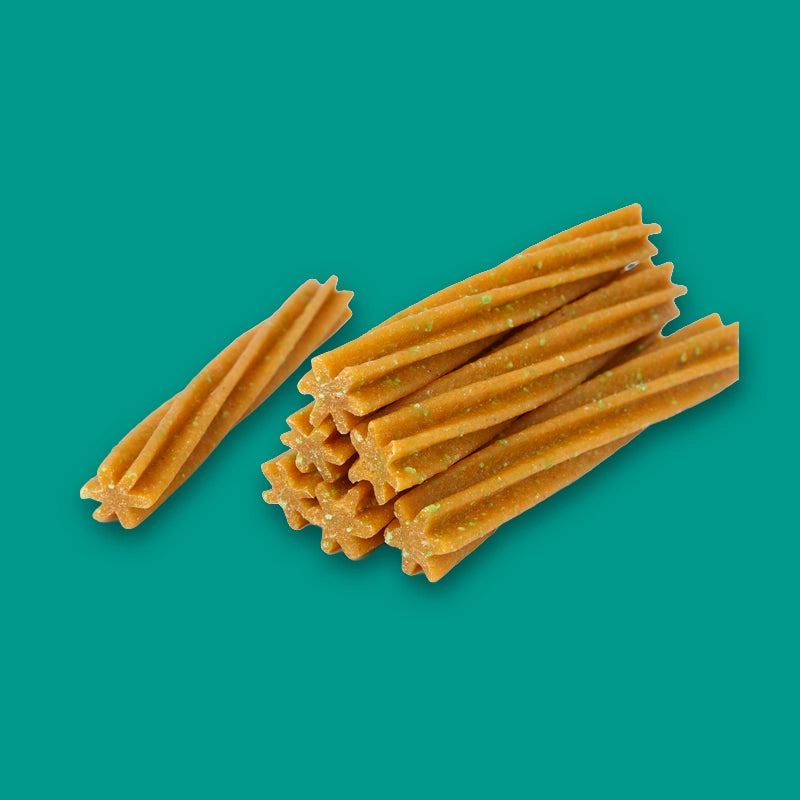
In addition to dental care, diet, suitable chews, and regular veterinary check-ups also play an important role. Each of these measures complements the others. No single solution can prevent all problems, but together they contribute to supporting oral health in the long term.
Whoever observes their dog attentively, takes changes seriously, and ensures regular care, creates a good foundation for a healthy dog's life. This is not about analyzing every little behavior. It is much more important to know your own dog's typical habits. This is precisely how changes are often noticed particularly early.
Sometimes frequent head shaking is simply due to a harmless cause. In other cases, teeth, jaw, or ears may be involved. A closer look at the overall picture helps to better understand possible connections. If you recognize changes early and seek veterinary advice when in doubt, you responsibly support your dog's health. Regular oral care, attentive observation, and preventive examinations form a strong foundation for the well-being of your four-legged companion.